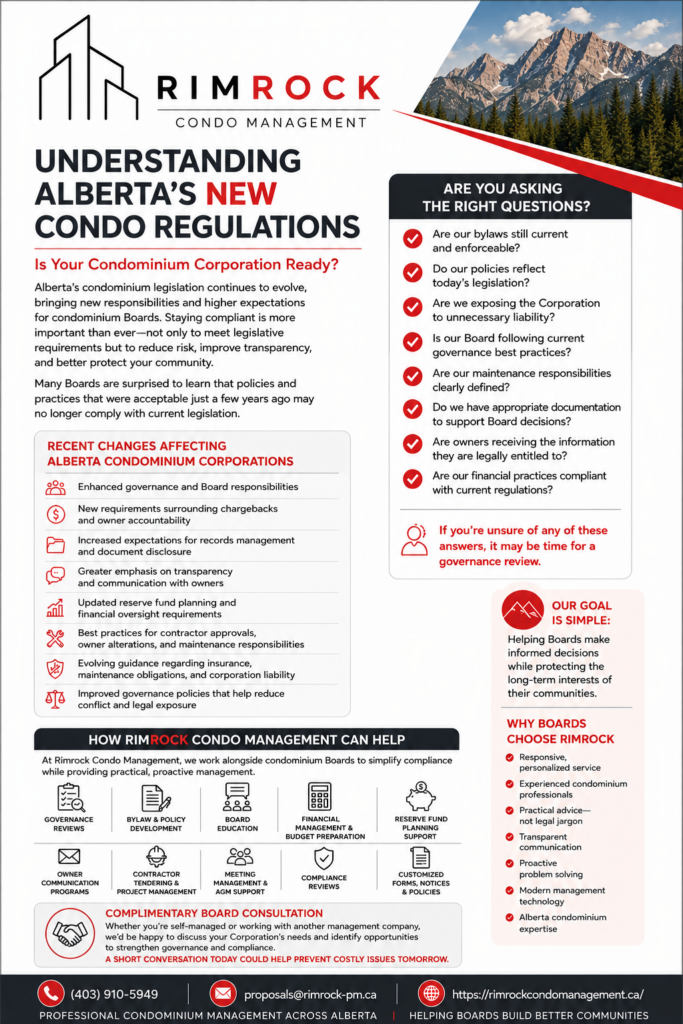
Leading a Condominium Corporation in Alberta has evolved from a neighborly volunteer position into a role that mirrors corporate governance. As we navigate 2026, the landscape of owner rights and voting procedures continues to shift, placing a higher burden of accuracy on volunteer boards. One of the most significant pivots in recent years: and one that still trips up boards from Lethbridge to Edmonton: is the transition toward the "One-Owner-One-Vote" default for ordinary resolutions.
For decades, the "Unit Factor" was the king of the boardroom. While unit factors still dictate your budget contributions and specific types of votes, the move toward a simplified voting structure for day-to-day decisions was designed to democratize the process. However, simplicity in theory often leads to complexity in execution.
If your board isn't strictly adhering to the current standards for meeting notices, proxy validation, and record-keeping, you aren't just making a "clerical error." You are exposing your corporation to legal challenges that can stall projects and drain reserve funds. This is where professional condo management Lethbridge becomes an essential asset rather than a luxury.
Understanding the Shift: Unit Factors vs. One Vote Per Owner
In the past, every vote was a math problem. You had to calculate the percentage of ownership based on the 10,000 unit factor total. Under the modernized Alberta Condominium Property Act (CPA), the default for an ordinary resolution is now one vote per unit, unless a poll is demanded.
This change was intended to prevent a single owner with multiple units or a large commercial footprint from steamrolling the interests of the majority. But for a board, this means your registry must be flawless. You need to know exactly who owns what, who is in arrears (and therefore potentially ineligible to vote), and how to handle units with multiple names on the title.
Key distinctions to remember:
- Ordinary Resolutions: Usually handled by a show of hands or one vote per unit.
- Special Resolutions: Still require 75% of the persons entitled to vote representing at least 75% of the total unit factors.
- The Poll Demand: Any person entitled to vote can demand a poll. If this happens, the "One-Vote" rule is tossed out, and you must revert to unit factors.
If your board doesn't have a digital system ready to pivot between these two methods mid-meeting, you are looking at a logistical nightmare.

Handling Multiple Owners: The "One Voice" Requirement
One of the most common points of friction in Lethbridge condo meetings occurs when a unit has multiple owners (e.g., a married couple or business partners). The law is clear: one unit equals one vote.
If both owners are present and cannot agree on how to cast that single vote, the vote for that unit is essentially voided for that specific resolution. This can significantly impact your quorum and the outcome of a tight vote. As a leader, you cannot afford to "guess" who has the authority to speak for the unit.
Utilizing condominium corporation management Alberta ensures that your voter registry is updated in real-time. When owners check in at your AGM, a professional manager verifies the title and ensures only one ballot is issued per unit, eliminating the risk of double-voting or unauthorized participation.
The Proxy Trap: Keeping Your Voting Legal
Proxies are a necessary tool for achieving quorum, especially in smaller Lethbridge communities where physical attendance might be low. However, they are also the most common target for legal disputes.
A "One-Owner-One-Vote" environment makes proxies easier to count, but the validity requirements remain strict. A valid proxy must:
- Be in writing.
- Be signed by the owner (or their attorney).
- Clearly state the date it was given.
- Identify the person authorized to use the proxy.
In 2026, electronic proxies are the standard. However, simply receiving an email saying "I let John vote for me" does not cut it. You need a secure, encrypted system to verify identities. Condo management services Lethbridge provide the digital infrastructure to collect, verify, and store these proxies, ensuring that your meeting's outcomes are bulletproof against future challenges.

Meeting Notices: The 14-Day Clock
Compliance starts long before the first motion is moved. The Alberta Condominium Property Act is very specific about notice periods. For an AGM or Special General Meeting, owners must receive at least 14 days' notice.
But "14 days" doesn't just mean two weeks on the calendar. You have to account for the "deemed notice" rules. If you are mailing notices, you must add additional days for postage. If you are using electronic delivery, you must ensure the owner has formally consented to receive notices that way.
Common Notice Mistakes:
- Failing to include the agenda: If it’s not on the agenda, you shouldn't be voting on it.
- Incomplete financial statements: Owners must have the budget and audited (or professionally reviewed) financials in hand before they are asked to vote on board business.
- Missing the "Place and Time": It sounds simple, but a vague location description can invalidate a meeting.
Record-Keeping: Your Only Real Defense
If an owner challenges a vote six months down the line, can you prove that quorum was met? Can you show exactly how many unit factors were represented versus the number of individual owners?
Strategic alignment between your board and your management company is the only way to ensure these records are maintained. Professional management involves more than just collecting dues; it involves the meticulous archiving of:
- Signed voter registries.
- Validated proxy forms.
- Ballots from poll votes.
- Minutes that clearly state the results of every resolution.
Without this "paper trail" (which is increasingly a digital trail), your board is flying blind. If a dispute reaches the Alberta King’s Bench or a tribunal, the burden of proof is on the corporation to show that the vote was conducted legally.

Why Professional Management is the Logical Choice for 2026
The "One-Owner-One-Vote" rule is a perfect example of why the DIY approach to condo management is becoming obsolete. The margin for error is shrinking, and the financial stakes are rising. A single mismanaged vote can lead to an injunction, halting a critical roof repair or a necessary special levy.
By partnering with Rimrock Condo Management, you are investing in operational redundancy. We provide the specialized methodology needed to navigate the complexities of the Condominium Property Act. We handle the heavy lifting of notice distribution, proxy verification, and meeting facilitation so that you can focus on the strategic direction of your community.
The Measurable Advantages of Professional Oversight:
- Reduced Legal Risk: Strict adherence to CPA guidelines minimizes the chance of contested meetings.
- Operational Efficiency: Digital voting and registry management speed up the AGM process.
- Transparency: Owners are more likely to trust a process managed by an impartial third party.
- Financial Integrity: Accurate voting ensures that budget approvals and special assessments are legally binding.
Take Control of Your Governance
Leading a condo corporation shouldn't feel like a constant battle against red tape. When your voting procedures are integrated and compliant, you create a sense of stability that protects property values and fosters a positive community culture.
If your board is struggling to keep up with the latest regulations or if your last AGM felt like a chaotic mess of unit factor calculations and disputed proxies, it’s time to modernize. Don't let a procedural error become a financial liability for your owners.
Maximize your corporation's performance and ensure total compliance.
Request a Proposal for Professional Condominium Management today.
#RimrockCondoManagement #LethbridgeCondos #AlbertaPropertyManagement #CondoBoardGovernance #LethbridgeRealEstate #CondoCompliance2026